
Beneath the shimmering surface of the ocean lies a world bursting with color a living mosaic of coral, movement, and light. Few sights on Earth can rival the dazzling beauty of a coral reef, where every inch teems with life and vibrancy. Among the reef’s most captivating inhabitants are its brilliantly colored fish living jewels that glide effortlessly through coral gardens like brushstrokes on nature’s finest canvas.
Coral reefs are more than breathtaking spectacles; they are vital ecosystems that support nearly a quarter of all marine life. Each species plays an essential role from maintaining algae balance to nurturing young fish ensuring that the reef remains a thriving, self-sustaining habitat. The vivid hues of reef fish are not merely for show; they are vital tools for survival, communication, and attraction.
But what truly fascinates us, as humans, is the way these colors stir something within a sense of wonder, calm, and curiosity about the mysteries beneath the waves. The coral reef, in all its radiance, reminds us how artful and alive nature can be. In this article, we’ll explore the top 10 most colorful fish found in coral reefs, each one a masterpiece of evolution and a symbol of the ocean’s endless creativity.
The Science Behind the Colors
The breathtaking colors of coral reef fish are more than just a feast for the eyes they are a product of intricate biology and evolutionary adaptation. Fish coloration comes primarily from two mechanisms: pigments and structural coloration. Pigments are chemical compounds in the skin that absorb and reflect specific wavelengths of light, producing reds, yellows, and oranges. Structural coloration, on the other hand, results from microscopic structures that manipulate light, often creating iridescent blues and greens that seem to shimmer and change with movement.
These vibrant colors serve multiple purposes in the reef ecosystem. Some fish use them for camouflage, blending into the kaleidoscopic coral surroundings to hide from predators. Others display bold hues as a mating signal, attracting potential partners with their vivid patterns. In certain species, bright colors act as a warning, signaling toxicity or a defensive capability to would-be predators.
The coral reef environment itself enhances these colors. Sunlight filtering through clear, shallow waters amplifies the brilliance of the pigments, while the complex coral formations provide contrasting backgrounds that make patterns stand out even more. This combination of biological adaptation and environmental interplay creates the dazzling displays that have fascinated humans for centuries.
Top 10 Most Colorful Coral Reef Fish
1. Mandarin Fish (Synchiropus splendidus)
Known for its striking combination of blue, orange, and green patterns, the Mandarin Fish is often considered one of the most visually stunning reef inhabitants. Native to Indo-Pacific reefs, these small fish are as unique in behavior as they are in appearance. A fascinating defense mechanism is their ability to secrete a protective mucus that shields them from disease and predators.
2. Clownfish (Amphiprioninae)
Bright orange with bold white bands, the Clownfish has become a household name thanks to popular media like Finding Nemo. Beyond their charm, clownfish play a crucial ecological role through a symbiotic relationship with sea anemones, gaining protection from predators while providing food scraps and cleaning services to their hosts.
3. Regal Angelfish (Pygoplites diacanthus)
With yellow, blue, and white stripes, the Regal Angelfish is a shy, elusive resident of the Red Sea and Indo-Pacific reefs. Its vibrant patterning not only makes it a visual delight for divers but also serves as an identifier within its species, helping with communication and mating behaviors.
4. Royal Gramma (Gramma loreto)
The vivid purple and yellow body of the Royal Gramma is native to the Caribbean Sea. These peaceful fish are popular in aquariums due to their striking colors and gentle temperament, often hiding among reef crevices yet brightening every corner they inhabit.
5. Parrotfish (Scaridae family)
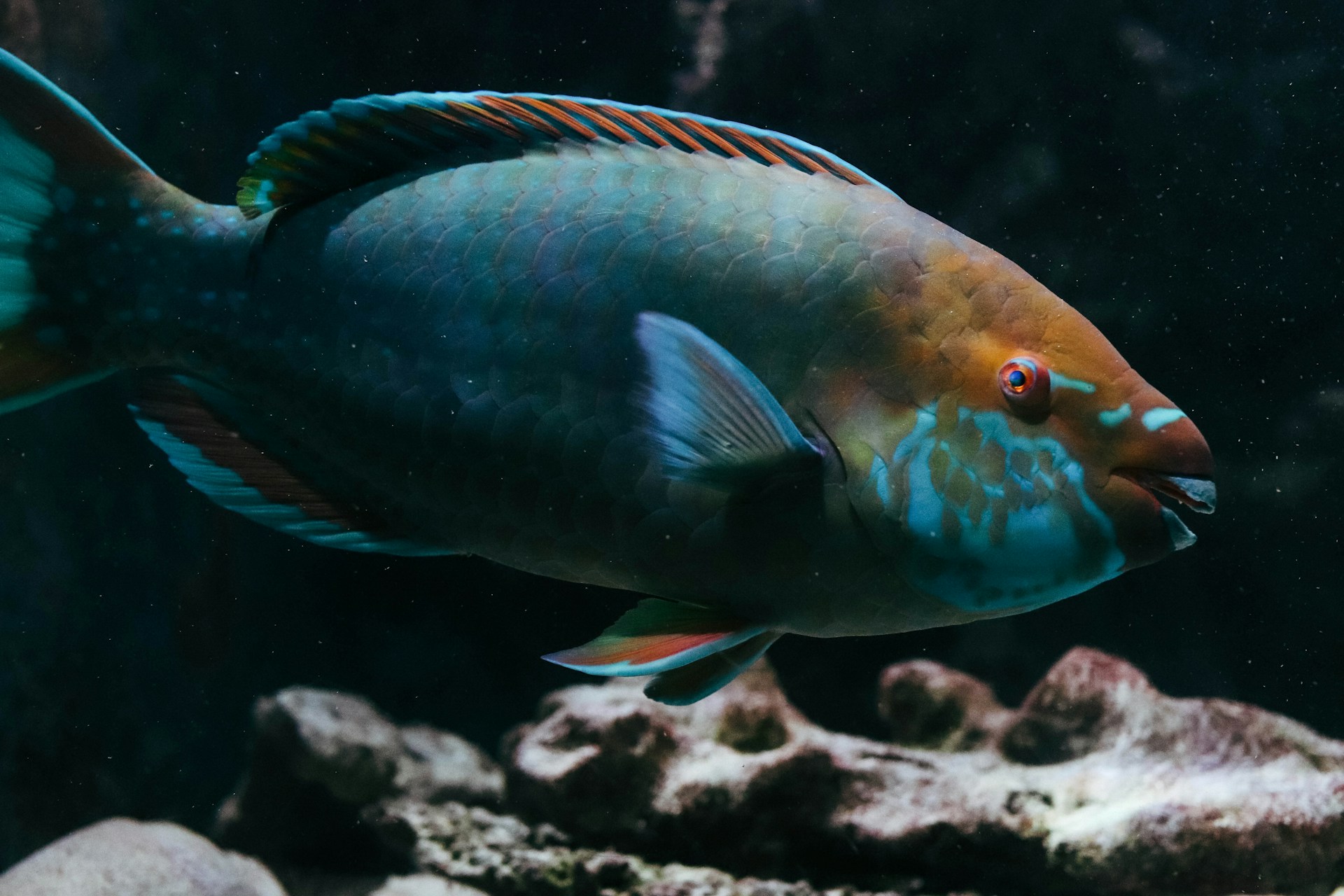
Parrotfish are famous for their rainbow-colored scales and powerful beak-like mouths, which they use to scrape algae from coral surfaces. By doing so, they play an essential role in maintaining coral reef health, preventing algae overgrowth and supporting coral regeneration.
6. Emperor Angelfish (Pomacanthus imperator)
The Emperor Angelfish dazzles with striking blue and yellow horizontal stripes across its body. Interestingly, juveniles display a completely different coloration blue and white circular patterns which gradually transform as they mature. Native to tropical Indo-Pacific reefs, this species is a true symbol of the vibrant diversity found in coral ecosystems.
7. Flame Angelfish (Centropyge loriculus)
The Flame Angelfish stands out with its fiery red-orange body and black vertical bars. Found primarily in the Pacific Ocean, it is a small but highly sought-after species in the aquarium trade. Its bold coloration not only attracts mates but also acts as a warning to predators.
8. Moorish Idol (Zanclus cornutus)
With its black, white, and yellow bands and long, flowing dorsal fin, the Moorish Idol is instantly recognizable. Widespread in Indo-Pacific waters, this species is admired by divers for its elegance, though it is notoriously difficult to keep in captivity, requiring very specific environmental conditions to thrive.
9. Butterflyfish (Chaetodontidae family)
Butterflyfish come in a wide variety of colors and patterns, from soft pastels to striking contrasts. Typically seen in pairs, they are important indicators of reef health, as their presence and behavior can reveal changes in environmental conditions. Their intricate designs also play a key role in species recognition and communication.
10. Blue Tang (Paracanthurus hepatus)
The Blue Tang is known worldwide thanks to the beloved character “Dory.” Its electric blue body, black markings, and yellow tail make it one of the most iconic reef fish. Found throughout the Indo-Pacific, Blue Tangs are active swimmers that graze on algae, helping to keep coral reefs healthy and balanced.
Conservation Note
While the beauty of coral reef fish is mesmerizing, these ecosystems face severe threats. Coral bleaching, caused by rising ocean temperatures, can devastate habitats, leaving colorful fish without shelter. Pollution, overfishing, and climate change further endanger these vibrant species.
Conservation efforts are essential to protect these underwater jewels. Simple steps, such as sustainable diving practices, using reef-safe sunscreen, and supporting marine protected areas, can make a meaningful difference. Additionally, raising awareness about the fragility of reefs encourages responsible stewardship and ensures that future generations can experience the same splendor we do today.
Conclusion
The coral reef is a living canvas, where nature’s artistry is expressed in every scale, stripe, and shimmer. From the radiant Mandarin Fish to the iconic Blue Tang, each species contributes to the reef’s intricate balance and breathtaking beauty. By understanding, appreciating, and protecting these ecosystems, we not only preserve the vibrant colors of the reef but also safeguard the rich biodiversity that makes our oceans so extraordinary.
The colors of the reef remind us that biodiversity is the true beauty of our planet.